
If you’ve ever caught yourself hunched over your phone scrolling through social media, reading emails, or texting for what feels like just a few minutes — only to look up and realize an hour has passed — you already know the feeling that follows. A dull ache at the base of your skull. Stiffness across your shoulders. Maybe even a headache that creeps up the back of your head. That discomfort has a name, and here in Austin, TX, it’s something Dr. Jacoby Bergeron sees at Stonelake Chiropractic more and more often: text neck.
This condition isn’t just a catchy term. It describes a very real biomechanical problem that’s affecting people of all ages — from teenagers glued to their phones to working adults spending hours on laptops. Understanding what text neck is, why it happens, and what you can do about it could make a significant difference in how you feel every single day.
What Is Text Neck?
Text neck is a modern overuse syndrome caused by the repeated stress placed on the neck and spine when you tilt your head forward and downward — most commonly while looking at a smartphone, tablet, or other screen. The human head weighs roughly 10 to 12 pounds in a neutral position. But as your head tilts forward, the effective load on your cervical spine increases dramatically. Research suggests that at just 30 degrees of forward tilt, the functional weight on your neck can increase to around 40 pounds — and at 60 degrees, that number climbs even higher. Over hours and hours of daily use, that sustained load takes a real toll on your muscles, joints, discs, and nerves.
What Causes Text Neck?
Text neck doesn’t happen from one bad afternoon on your phone. It develops gradually, through repeated and prolonged postures that place abnormal mechanical stress on your cervical spine. The primary driver is simple: we hold our phones — and increasingly, our tablets and laptops — below eye level. That means our heads are almost always tilting downward when we use these devices.
Your cervical spine (the seven vertebrae in your neck) is designed to support your head when it sits balanced over your shoulders. The moment that balance shifts forward, the muscles in the back of your neck have to work overtime to prevent your head from falling. They’re essentially holding against gravity all day long. Over time, those muscles fatigue, the joints in your neck become compressed, and the soft tissues around them adapt to that forward-leaning posture in ways that are hard to reverse without intentional care.
Several contributing factors make text neck worse. Long, uninterrupted screen sessions without movement breaks are a major culprit. So is working from a desk or couch setup that isn’t ergonomically arranged. Weak core and upper back muscles — which play a supporting role in maintaining good posture — can accelerate the problem. Even stress and muscle tension can compound the effects by causing the neck and shoulder muscles to tighten further.
Signs & Symptoms to Watch For
Because text neck develops slowly, many people don’t connect their symptoms to their screen habits right away. They assume their headaches are from stress, or their shoulder tightness is from sleeping wrong. But there are some telling patterns to recognize.
The most common symptom is a persistent ache or stiffness in the neck, especially toward the end of the day or after extended screen time. You might notice soreness across the tops of your shoulders and upper back — a region often called the “upper trapezius” — along with tension headaches that start at the base of the skull and radiate upward. Some people experience a reduced range of motion, where turning or tilting the head feels restricted or uncomfortable.
In more progressed cases, text neck can contribute to symptoms that travel down the arm, such as tingling, numbness, or weakness. This can happen when the cervical nerve roots become irritated due to disc compression or joint dysfunction in the neck. If you’re experiencing any of these neurological symptoms, it’s important to get evaluated promptly. At Stonelake Chiropractic in Austin, Dr. Jacoby Bergeron takes a thorough approach to identifying not just where you hurt, but why.
The Long-Term Impact on Your Spine
This is where many people are surprised. Text neck isn’t just a soreness issue — it has real structural implications if it goes unaddressed for years. One of the most significant concerns is the gradual loss of the natural cervical curve. Your neck is designed to have a gentle inward curve (called a lordosis), which helps distribute the weight of your head efficiently and protects the spinal cord and nerve roots. Chronic forward head posture can flatten or even reverse that curve over time.
When the cervical curve diminishes, the discs between your vertebrae absorb more direct compressive force rather than distributing it through the natural architecture of the spine. This can accelerate disc wear, contribute to degenerative changes, and increase the risk of disc herniation. The muscles and ligaments that support the cervical spine also undergo adaptive shortening on one side and weakening on the other, creating muscular imbalances that are difficult to correct without targeted intervention.
Posture problems in the neck rarely stay isolated there, either. Forward head posture shifts your center of gravity, which often leads to compensatory changes further down — rounded shoulders, increased thoracic kyphosis (an exaggerated hump in the mid-back), and even low back stress. Here in Austin, it’s very common for patients visiting Stonelake Chiropractic to come in thinking they just have neck pain, only to discover through evaluation that their posture has created a cascade of issues across the spine.
How Chiropractic Care Fits In
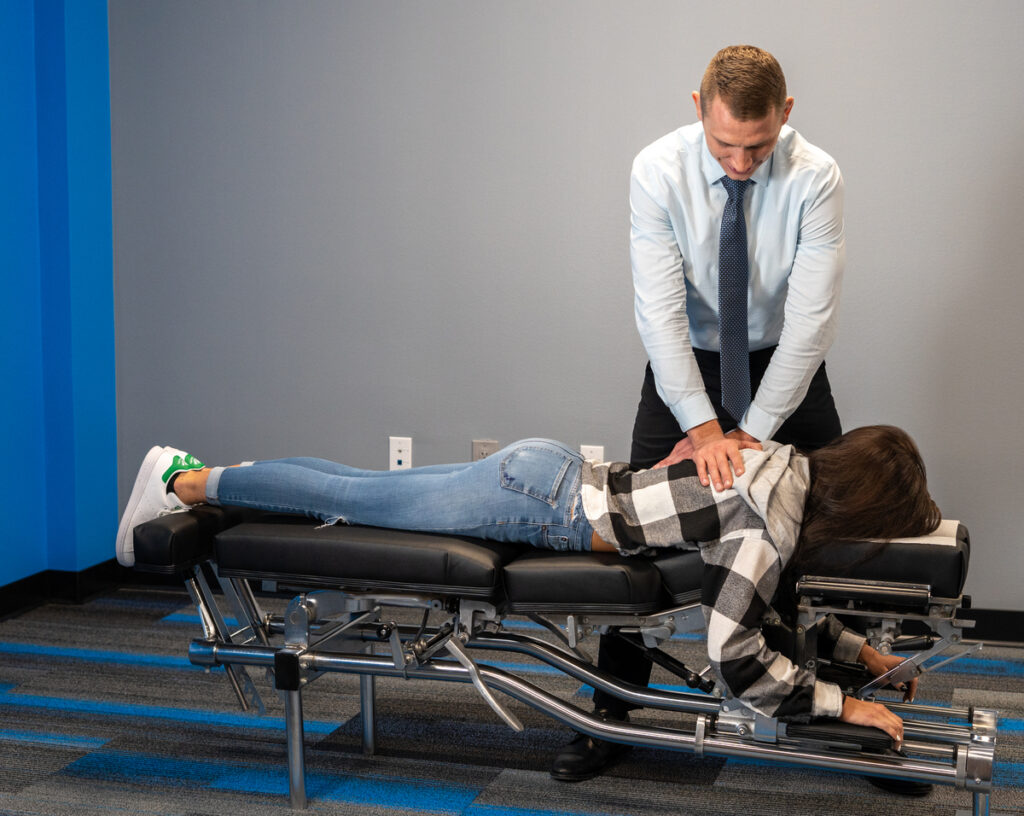
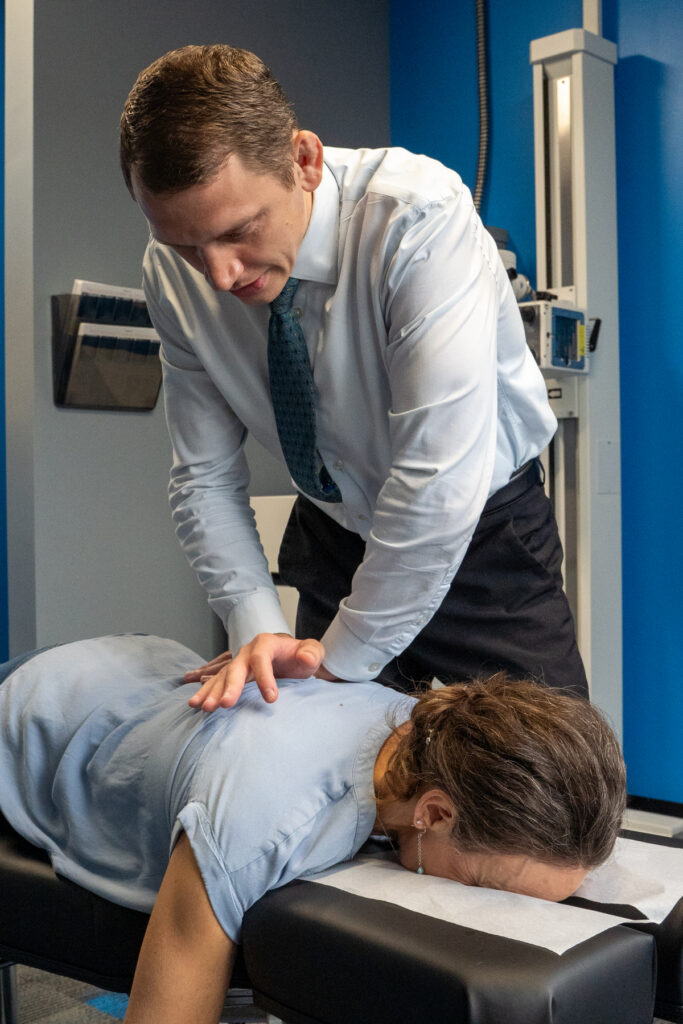
Chiropractic care offers a non-invasive, drug-free approach to addressing the underlying structural and muscular dysfunction associated with text neck. Rather than simply masking symptoms, chiropractic focuses on restoring normal joint movement, improving spinal alignment, and supporting the surrounding muscles and soft tissues so that your body can function more effectively.
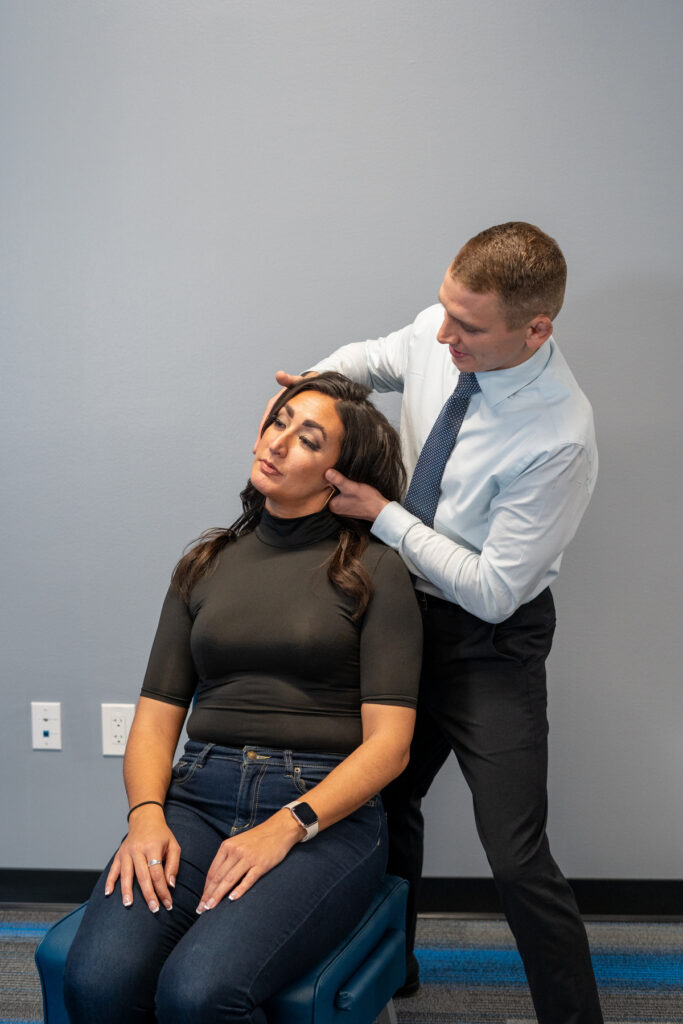
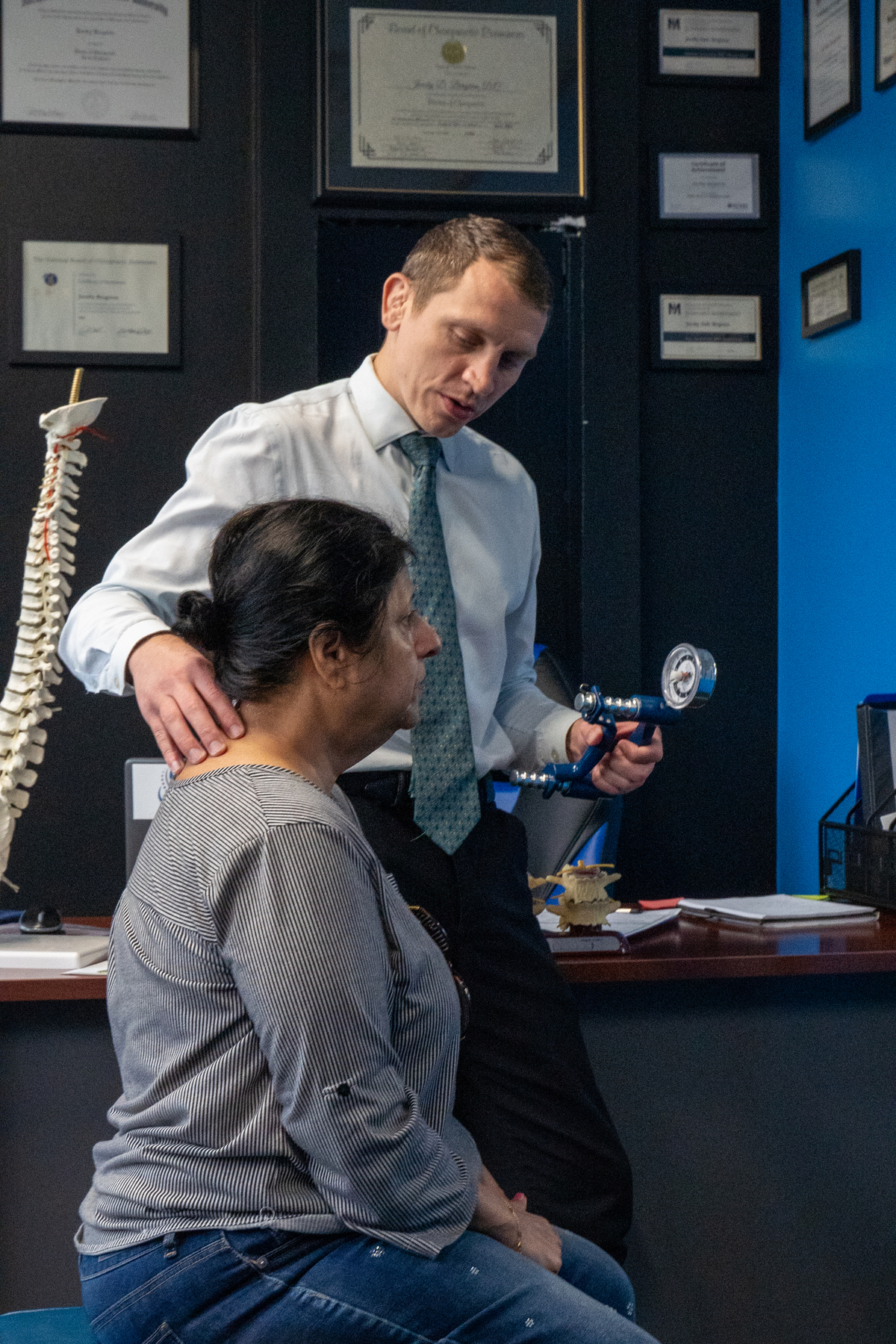
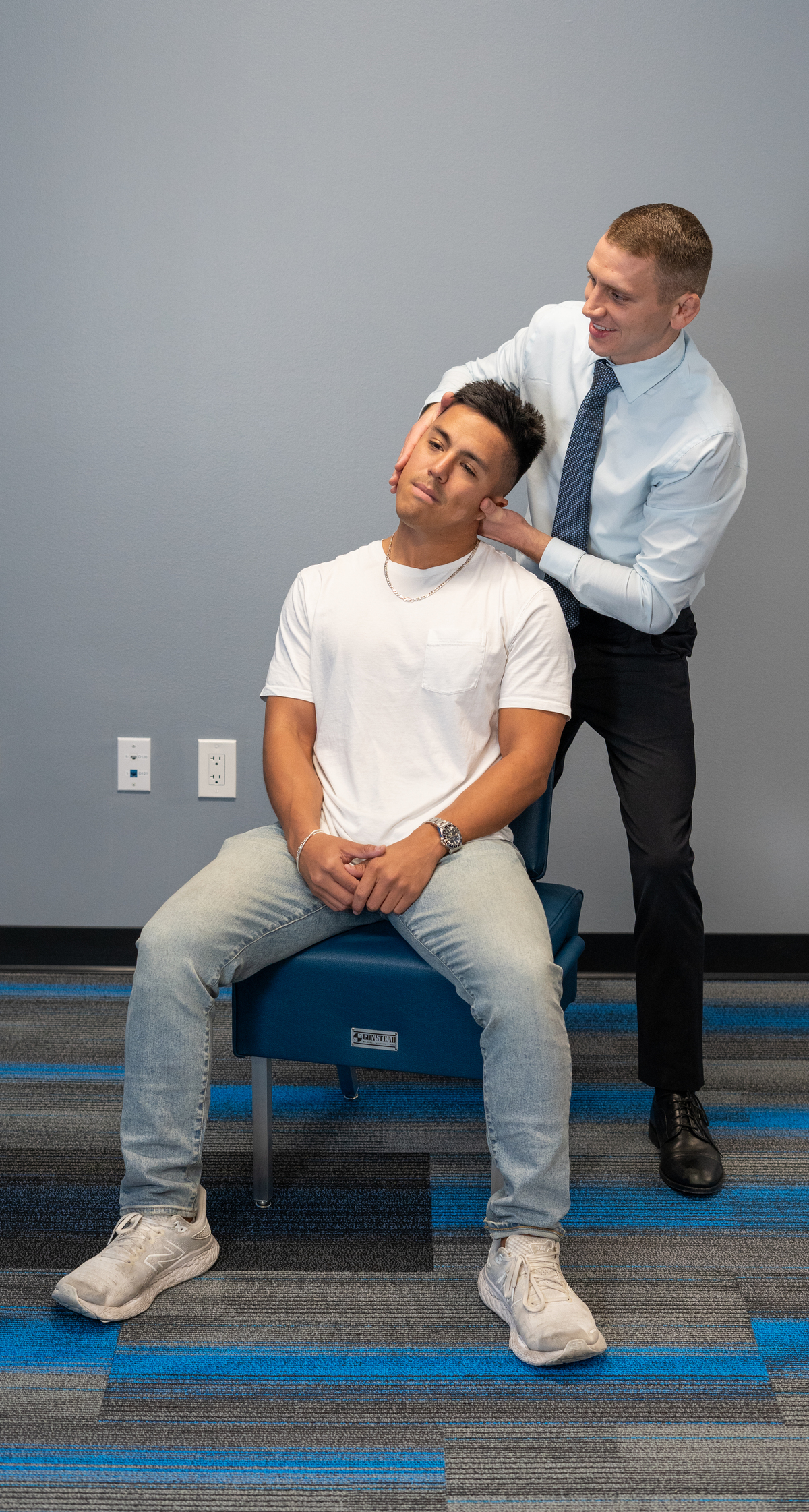
At Stonelake Chiropractic in Austin, TX, Dr. Jacoby Bergeron begins with a thorough assessment to understand each patient’s unique presentation. This typically involves evaluating posture, range of motion, and how the cervical joints are moving. From there, a care plan is developed that may include spinal adjustments to restore mobility to restricted joints, soft tissue work to address muscle tension and trigger points, and rehabilitative guidance to help strengthen the postural muscles that support the neck and upper back.
Evidence from organizations like the National Center for Complementary and Integrative Health (NCCIH) and the American College of Physicians (ACP) has indicated that spinal manipulation is a reasonable first-line approach for neck pain and musculoskeletal complaints. Chiropractic care is most effective when it’s part of a broader strategy that includes patient education, ergonomic adjustments, and exercises to reinforce postural improvements made in the office.
It’s also worth noting that chiropractic care isn’t a one-size-fits-all proposition. Dr. Jacoby Bergeron tailors care to each individual, taking into account their symptoms, lifestyle, and goals. Some patients see meaningful improvement in comfort and mobility within just a few visits; for others, especially those with more long-standing postural changes, progress takes more time and consistency. Either way, the goal is always to help you feel better, move better, and understand how to protect your spine going forward.
Practical Tips to Protect Your Neck
The good news is that there’s quite a bit you can do on your own to reduce the strain that text neck places on your body. Small, consistent changes in how you hold and use your devices can add up to a meaningful difference over time.
The single most impactful adjustment is raising your phone or screen to eye level. When your device is at eye level, you don’t have to tilt your head forward to see it. This may feel awkward at first — especially with a phone — but it dramatically reduces the load on your cervical spine. On your computer or tablet, adjusting the screen height so that the top of the monitor is approximately at or just below eye level is a helpful benchmark.
Movement breaks are equally important. Every 20 to 30 minutes of screen time, take a brief pause to move your neck gently through its range of motion — slowly looking up, turning side to side, and doing a few gentle chin tucks (drawing your chin straight back toward your neck, not downward). These simple movements help counteract the static postures that accumulate throughout the day. Strengthening your deep neck flexors and upper back muscles through targeted exercises — ideally guided by a professional — is one of the most effective long-term strategies available.
Sleeping position matters too. Sleeping on your back or side with a supportive pillow that maintains neutral cervical alignment is generally better for your neck than sleeping on your stomach, which forces the head to rotate for hours at a time. If you’re unsure what pillow height is right for you, that’s a great conversation to have with the team at Stonelake Chiropractic during your next visit.
When to See a Chiropractor
If your neck discomfort is mild and occasional, the lifestyle modifications described above may be all you need to start feeling better. However, there are several signs that it’s time to seek a professional evaluation rather than hoping the pain resolves on its own.
You should consider scheduling an appointment if your neck pain or stiffness has persisted for more than a week or two, is worsening rather than improving, or is significantly interfering with your daily activities or sleep. Recurring headaches that seem connected to neck tension are also a good reason to get checked out. These are situations where professional care can help identify and address what’s driving your symptoms.
There are certain red flags that warrant more urgent medical attention rather than chiropractic care: severe pain following trauma, loss of bladder or bowel control, significant arm weakness, or any neurological changes that come on suddenly. In these situations, Dr. Jacoby Bergeron and the team at Stonelake Chiropractic will always prioritize your safety and refer you to the appropriate medical provider if needed. Chiropractic offices are part of your broader healthcare team — not a replacement for it.
Posture Comparison: Healthy Neck Habits vs. Text Neck Habits
|
Category |
Healthy Posture Habits |
Text Neck Habits |
|---|---|---|
|
Head Position |
Balanced over shoulders, ears aligned with mid-shoulder |
Tilted forward and downward, chin jutting out |
|
Screen Placement |
At or near eye level |
Held low in the lap or on a desk without adjustment |
|
Movement Breaks |
Every 20-30 minutes with gentle neck movement |
Extended sessions with little or no movement |
|
Spinal Load on Neck |
Approximately 10-12 lbs (neutral position) |
Up to 40-60 lbs or more (at 30-60 degrees of tilt) |
|
Upper Back Position |
Shoulders relaxed and back, natural thoracic curve |
Rounded shoulders, increased thoracic kyphosis |
|
Sleep Posture |
Back or side sleeping with supportive pillow |
Stomach sleeping or inadequate pillow support |
Myths vs. Facts About Text Neck
Myth: Text neck only affects teenagers and young people.
Fact: While younger generations do spend significant time on screens, text neck affects people of all ages. Working adults who spend hours on computers, tablets, or smartphones are equally — and sometimes more — susceptible. Professionals with desk-based jobs are among the most common patients Dr. Jacoby Bergeron sees at Stonelake Chiropractic with this pattern of complaints.
Myth: If it doesn’t hurt badly, it’s not causing any real damage.
Fact: Structural changes from chronic forward head posture — like loss of cervical curve or early disc wear — can develop gradually and without intense pain. Mild, intermittent discomfort should not be dismissed as unimportant. By the time pain becomes severe, the underlying changes may have been building for months or years.
Myth: Stretching alone will fix text neck.
Fact: Stretching is valuable and can provide relief, but it doesn’t address the underlying joint dysfunction, postural adaptations, or muscular imbalances that contribute to text neck. A comprehensive approach — combining movement, strengthening, ergonomic changes, and when needed, professional care like chiropractic — tends to produce much better and longer-lasting outcomes.
Myth: Chiropractic adjustments are just a temporary fix that doesn’t address the real problem.
Fact: Chiropractic care, when combined with patient education and corrective exercises, addresses both symptoms and contributing causes. The goal at Stonelake Chiropractic is never to create dependency — it’s to help you restore function, understand your body, and equip you with the tools to maintain your results outside the office.
Myth: Text neck is inevitable if you use a smartphone.
Fact: Smartphone use doesn’t automatically lead to text neck. It’s the sustained, uninterrupted, poor-posture use of devices that causes the problem. With awareness, ergonomic adjustments, regular movement breaks, and appropriate strengthening, most people can use their devices regularly without developing chronic cervical issues.
Final Thoughts
Text neck is one of the clearest examples of how modern lifestyle habits can quietly affect our health in ways we don’t immediately connect. The discomfort you feel at the end of a long screen day isn’t something you simply have to accept as normal — it’s your body communicating that something needs to change. The encouraging part is that with the right information, some practical adjustments to your habits, and professional support when needed, this is a very manageable problem.
Here in Austin, the team at Stonelake Chiropractic is passionate about helping the local community understand these kinds of everyday health challenges. Dr. Jacoby Bergeron approaches every patient as an individual, taking time to explain what’s happening, why it’s happening, and what realistic steps can help. Whether you’ve been dealing with neck discomfort for years or you’re noticing early warning signs, you don’t have to figure it out alone. Stonelake Chiropractic is here to be a resource for you and your family — not just when you’re in pain, but as part of your long-term approach to living well in a screen-heavy world.
Frequently Asked Questions
Can text neck cause permanent damage to my spine?
If left unaddressed over many years, chronic forward head posture associated with text neck can contribute to structural changes like loss of cervical curve and accelerated disc wear. However, when caught and managed early — through posture improvements, exercises, and professional care — the progression of these changes can often be slowed or halted. Early intervention is always better than waiting.
How long does it take to recover from text neck?
Recovery time varies depending on how long the problem has been present and how significant the postural changes are. Some people notice improvement in discomfort within a few weeks of making consistent lifestyle changes and beginning chiropractic care. Others with more long-standing issues may require more time and a more structured care plan.
Is text neck the same as a pinched nerve?
They are related but not the same thing. Text neck describes the overuse syndrome caused by forward head posture, while a pinched nerve (cervical radiculopathy) refers to nerve root compression that can sometimes result from the disc and joint changes that text neck contributes to. A thorough evaluation can help determine whether nerve involvement is part of what you’re experiencing.
Can children develop text neck?
Yes, children and adolescents are increasingly affected, given how much time younger people spend on tablets, gaming devices, and smartphones. Their spines are still developing, which makes early habits particularly important. Encouraging regular breaks and teaching children about screen posture at a young age is a meaningful preventive step.
Should I use a neck brace to support my neck if I have text neck?
In most cases, prolonged use of a neck brace is not recommended for text neck because it can weaken the very muscles that need to be strengthened. A better approach is to address posture habits and build muscular support through targeted exercises. Dr. Jacoby Bergeron can help determine what kind of support or intervention is appropriate for your specific situation.
Is text neck only caused by phones, or do computers and tablets count too?
Any device that is consistently positioned below eye level and requires you to tilt your head forward can contribute to text neck. This includes laptops used without an external monitor, tablets held flat on a desk, and even reading a book or physical documents held in the lap. The device itself matters less than the posture you adopt while using it.
TL;DR Summary
-
Text neck is caused by the repeated forward head posture adopted while looking down at phones, tablets, and screens — placing significant mechanical stress on the cervical spine over time.
-
Symptoms range from neck stiffness and headaches to more serious issues like arm tingling, and the long-term effects can include loss of cervical curve and disc degeneration if not addressed.
-
Raising your screen to eye level, taking regular movement breaks, and strengthening postural muscles are the most practical daily habits to reduce your risk.
-
Chiropractic care — including spinal adjustments, soft tissue work, and rehabilitative guidance — can help restore function and address the underlying causes of text neck.
-
If you’re experiencing persistent or worsening neck discomfort, a professional evaluation with Dr. Jacoby Bergeron at Stonelake Chiropractic in Austin, TX is a smart and proactive next step.